


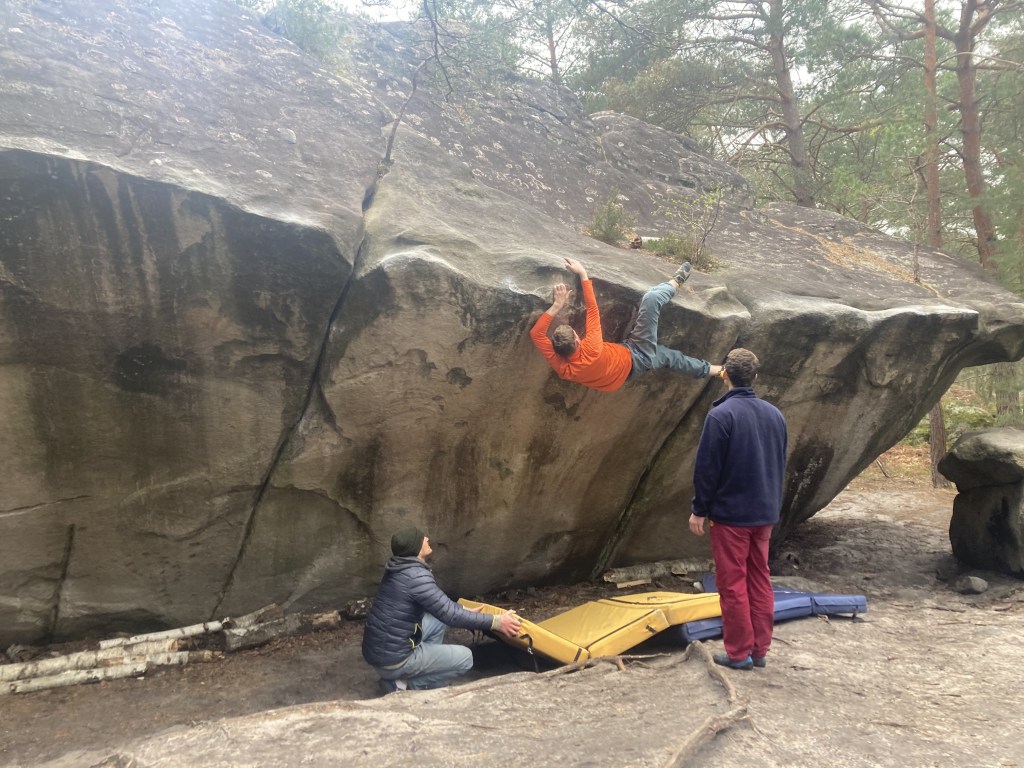
There is something mystical in the creation of a climbing route. Before the days of detailed topos in guides, websites and mobile phone apps, there would have been complex conversations between local climbers and tourist climbers on where crags were and how to locate certain routes. Using the latest app’s we now have the ability to check a photo and immediately understand the intricacies of a wall and it’s lines anywhere in the world. And yet we can still easily get lost on a new climb. The barriers to access amazing routes are indeed lower than ever, yet the mystic of climbing will always remain.
Paths carved into rock by nature over millions of years are picked out, nurtured and developed into new lines, rewriting history. I’d imagine that farmers walking their land thousands of years ago would never have thought they would encounter humans that want to hang off the cliffs, walls and boulders that surround. When I started climbing it wasn’t something that I particularly contemplated, the how and why routes existed on walls all around the world, they just did. But climbing is a sport built on perception of the natural environment around us. For years people have wandered into the unknown and found inspiration to carve paths that in some cases millions follow.
At the beginning of the year Robin and I were in Fontainebleau together, a mecca for climbing, with problems over 80 years old. Boulder problems that were formed generations ago, yet still exist in their original fashion. But in actual fact, these problems have changed and so has the frame of reference. To start, the world around us is unrecognisable, from steps forward in civil rights, to simply the fact we have climbing shoes! We walked some of these paths, exploring the same woods that climbers have explored for years, often overwhelmed by the mass of people choosing to explore alongside us. The history in those woods, in every crag you visit, in each guide book you open, unveils a little detail of how we got to where we are now.
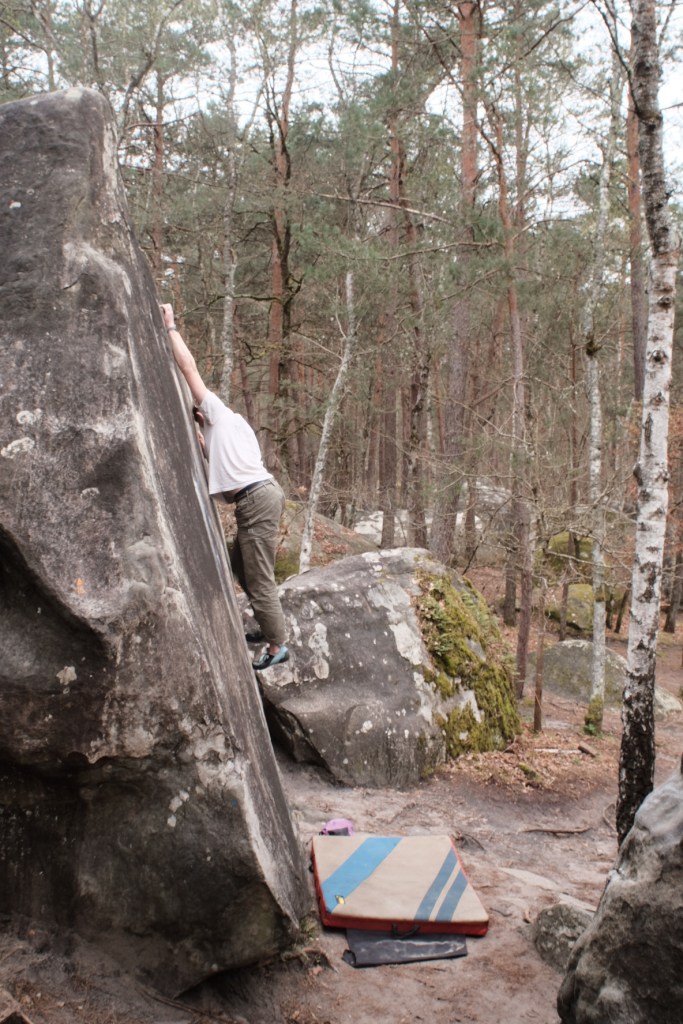
Robin working a beautiful f7a slab in Isatis. Such a prominant face that stood out to him from the minute he laid eyes apon it, the dedication that followed was inspiring.
I distinctly remember a video with Jim Pope talking about how he used to fascinate over the notes, details and descriptions in climbing guides because the history of all these legends before lay in those words, a fascination that has clearly supported his drive to become a world class climber. But what happens if we deviate from these paths? Or how do we even class a deviation from these paths?
Climbing takes this perspective of nature and applies a set of rules. But within this, each person can define their own rules. A redpoint has to include placing all the gear vs quick-draws that can all be pre-placed, knee pads vs no knee pads, or clip sticking the first bolt or two for safety vs not preclipping any bolts. There is a huge variety of climbing to be done. However, we decide to define our climbing adventures, we will decide to define them. Our definitions may wander and change depending on experiences or influences, but they will remain. Aside from these individual perceptions, there are basic principles of care and respect we should all share in the community. Respect to each other, but also the delicate nature around us. Returning from fontainebleau , I saw several posts and stories on instagram highlighting the overuse and lack of care for the beautiful forest. A theme we exert across the whole world at the moment, a general lack of care.
Defining a path or route can follow the same process. For too long, I have felt that to deviate from the set path of a boulder problem or sport route could lead me to using the wrong hold, getting stuck on harder parts of the wall or just not following the set problem that was once imagined. This linear understanding of such a fluid sport limited my enjoyment, trying to obey the line like a rule doesn’t add up when routes can lose holds, gain beta or disappear all together.
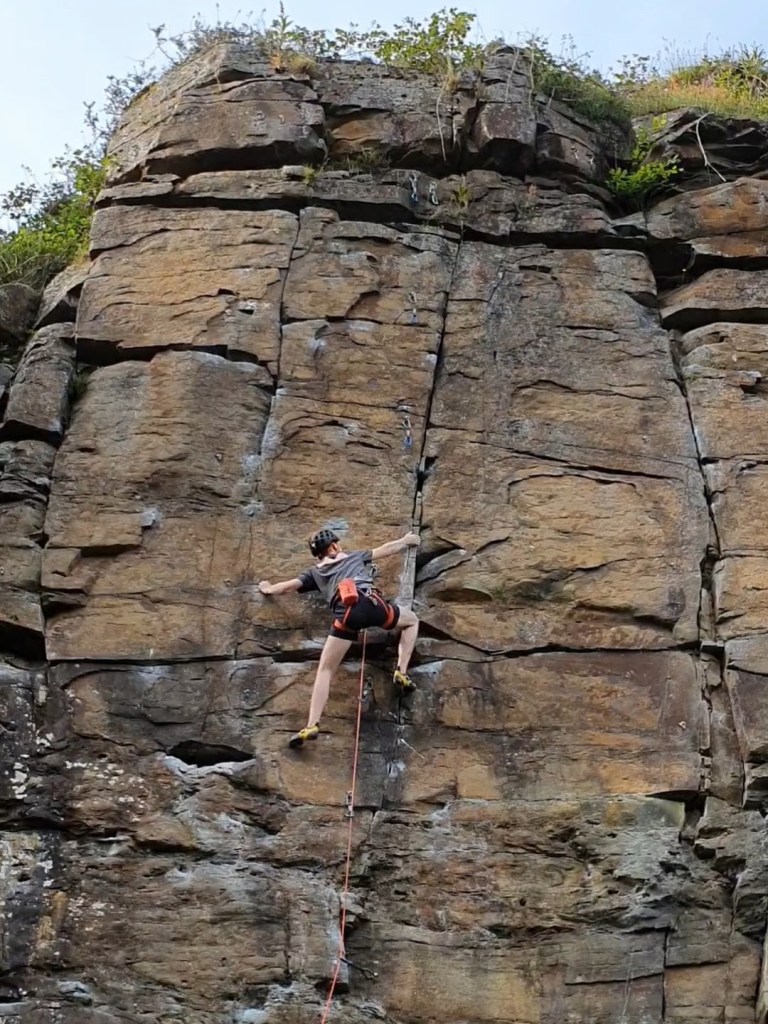
Climbing a route in Tirpentwys for which I use a hold all people say is not on the route for the crux, a deviation.
But it also falls back into the nature of grading in climbing, without repeating the line as imagined, you may not hold the grade. On two routes I have climbed recently, I had no clue whether the hold I was using was on the route or not, it’s not really off line, I like the movement, what stops me from using it? The extrinsic motivation, without repeating the path of history I won’t achieve the grade, people will point out my failure to follow the correct use of holds and there will be judgement from the archaic followers in our sport.
I climb for my enjoyment but also to untangle my brain, relieve stress and try to overcome something I fear but love. I love and appreciate the history in this sport, but the future can be defined by how we proceed to act. Climbing routes are often masterpieces, following natural features that have existed long before the existence of humans. However that doesn’t mean we can’t reimagine them in our own light. As long as we hold the basic principles to respect and care for nature (ourselves included), the rest is up to us.
I explore this process and understanding in climbing, and I also try to apply it to my life as a whole. There are so many designed paths in life for people to follow. It is hard to understand which fits you best at any given time. I live with AuDHD (ADHD and Autism) which can make me want to change path every day with impulsive immediacy, but to counteract this I fear change and the unknown. There is no path that fits our life, so we are always trying to imagine our own. With a magnitude of factors from luck to privilege, not all people have the same starting line, so be kind to yourself when you take a fall or need to deviate in unexpected ways.
B

 Circular Climbing Collective
Leave a comment